
Een educatief spel (denkspel) kan zoveel meer zijn dan een zoethoudertje !
An educational game (thinking game) can be so much more than just a placeholder!
On the website of a fellow professional, I recently read the following:
"What are your students allowed to do in class once they have finished their task? Drawing? Reading? What if you could reward the students by letting them play educational games (while simultaneously teaching them skills)?"
These sentences raised several questions for me such as:
1) Is this really about a reward?
2) Why should children who finish quickly be rewarded?
3) Should children who (just) don’t finish on time not be rewarded?
4) Did children who finish quickly even receive a task that is appropriate and challenging enough?
5) What exactly are educational games?
6) Do children learn skills by playing a game, or is more needed for that?
7) Can a game be used for more than just as a reward?
In this blog post, I will attempt to answer my own questions.
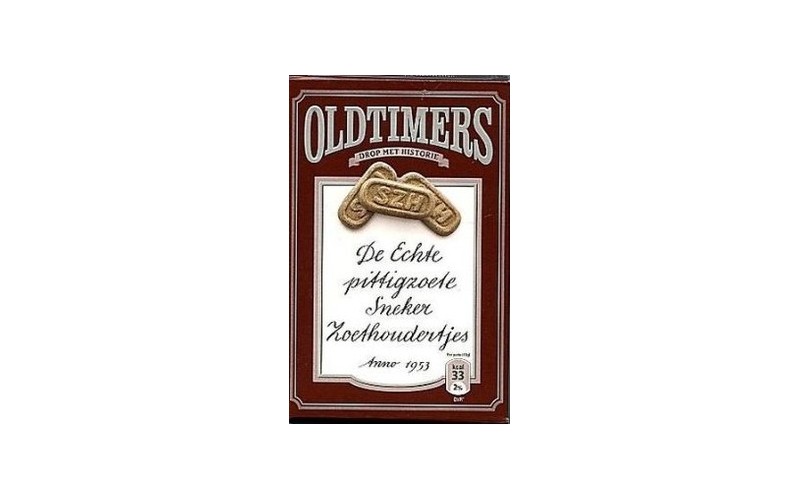
Pacifier or reward?pacifier-candy-box-front
I think it is common in many schools that children are allowed to do something for themselves when they have finished a task. The colleague suggests that in that case, children can be rewarded by playing an educational game that simultaneously teaches skills. However, I think that these children are kept busy with an educational game instead of reading or drawing until the majority of the children have also finished the task. Is this then a reward or a 'pacifier'? I think the latter.
Rightful reward?
Often, it will be the same children who finish their tasks quickly and still have time left to play a game. It is highly questionable whether these children have had to work hard to complete the assignment or, in other words: whether they were truly challenged. They probably have above-average intelligence, which allows them to finish quickly every time. The question then is why they should be repeatedly rewarded for this? As far as I am concerned, that is not necessary. After all, it is not their merit that they are above-average intelligent, and they probably did not have to work very hard for it. I have another objection to this form of reward. Children who do have to work just as hard or harder but consistently do not finish their work (just) within the allotted time should be rewarded with playing an educational/thinking game. This would benefit their motivation and self-image. However, this is not possible because they do not have any time left over.
Appropriate Education?
You might wonder whether children who regularly finish their work (much) earlier than the other children have been given a suitable (challenging) assignment. Or put differently: is there really appropriate education? After all, “all students must have a place at a school that matches their qualities and possibilities. This is called appropriate education. This form of education must ensure that every child gets the best out of themselves. Schools therefore offer extra help to students who need it, such as children with learning or behavioral problems.” (source https://www.rijksoverheid.nl/onderwerpen/passend-onderwijs/inhoud/doelen-passend-onderwijs)
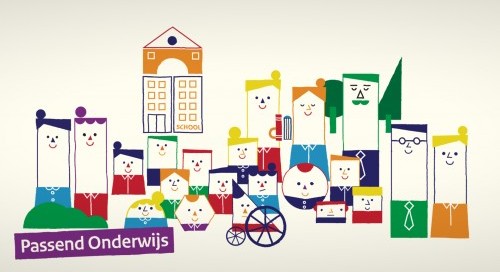
Appropriate education is not only a right for children with learning or behavioral problems but is also necessary for children with above-average intelligence. Instead of keeping them ‘occupied,’ it is, in my opinion, more desirable to give them more challenging assignments that match their own intelligence level. They can then spend the full amount of time on these tasks, just like the other children. They will enjoy school more and will no longer need to be kept busy.
That said, I am not saying that an educational/thinking game cannot be used in appropriate education. What I do dispute, however, is 1) that they play a role as a reward or pastime and 2) that they are mainly intended for the most intelligent children. Educational/thinking games can be used for various groups of children to further develop specific skills in a targeted way. Of course, more is needed for this form of appropriate education than simply having a stack of games available in the cupboard for when someone is done with their regular work.
So Much More…
Educational/thinking games can be a very valuable addition to the existing teaching materials. The physical element of games (grasping, moving, stacking, viewing three-dimensionally) can better suit the learning style or concentration ability of some children. More suitable than solely the more common paper or digital materials.
Educational game:
One definition of 'educational game' is: "Games that are played individually or in a group and are intended to convey knowledge or teach a skill" (http://www.encyclo.nl/begrip/educatieve%20spellen).
Educational games can be aimed at developing ‘regular’ academic skills, but are also very suitable for developing cognitive functions and/or social-emotional skills. Examples of cognitive functions are: not being impulsive, analyzing, making spatial relationships, or logical reasoning. Examples of social-emotional skills are communicating, collaborating, dealing with loss and winning, and showing perseverance. In a later blog post, I will go into more detail on this. The topic will then be cognitive functions, executive functions, and 21st-century skills in relation to thinking games.
To enable knowledge transfer and/or the development of skills, more is needed than just playing the game. This places requirements on the facilitator(s), the game, and the organization.
Instruction and guidance:
Just like other learning activities, the process must also meet certain conditions to ensure that the learning outcome is as great as possible: First of all, you need a facilitator, someone who can explain the game and guide the child if they get stuck. The facilitator must be knowledgeable. He/she must know the game and have played it themselves so that he/she knows where the difficulties lie and where the child/children might get stuck. He/she must also possess the skills to properly guide the process.
Additionally, the facilitator must stimulate and encourage where necessary. In many single-player games, the difficulty level increases and the child will get stuck and discouraged. The facilitator must then encourage the child and possibly help them find their way again (which is different from giving the answers!). The facilitator must also evaluate and reflect together with the child.
Game choice:
The game must also meet certain conditions. A game must first and foremost align with the goal you want to achieve, or the skills you want to train. As a teacher, it is therefore important that you have a clear idea of the goal you want to achieve and that you know well which game you can use to reach that goal. For example, if you want to develop math skills, the game 'StoryCubes' is not the most obvious choice. However, if your goal is to stimulate imagination, StoryCubes is indeed a good choice.
In addition, the element of luck should be of secondary importance when playing the game. It can happen that there is a luck factor present, but other skills must be more important when playing the game.
In the cooperative game 'Warp and Woof,' the luck factor is 'the rolling of the dice.' The social skills of cooperating and discussing are far more important. If the players do not apply these skills during the game, they cannot successfully complete the game.
Process:
If you really want a learning experience to take place through the use of educational/thinking games, then it must become a fixed part of the curriculum and therefore take place on a regular basis.
Slot:
I began this blog post with the quote "What are your students allowed to do in class once they have finished their task? Drawing? Reading? What if you could reward students by letting them play educational games (while simultaneously teaching them skills)?"
It is certainly possible to teach skills through the use of educational games. However, certain conditions must be met. The goal to be achieved must be clear, the games must align with the goal, and the game must correspond to the child's level. The facilitator(s) must also possess certain knowledge and skills, and the use of games should become a fixed part of the curriculum. When these conditions are met, playing a game will rise above the level of merely a 'time-filler' and become developmental material that can contribute to the development of skills needed in the 21st century.
If you want to start using thinking games in the classroom after reading this blog post or have been considering the idea for a while but are unsure how or which games might be suitable, please do not hesitate to contact me. The best way is via the email address info@denkspellenparadijs.nl or via my mobile phone number 06-26038868.
Do you already use educational/thinking games in the classroom or in your practice? I would love to hear about it from you in a comment under this blog post. How do you use them? For what purpose? Which games? etc. Even better, I would like to interview you about it and then write a separate blog post. Do you have other comments or suggestions? Feel free to leave a comment below.
I would love it if you subscribe to our newsletter or like us on Facebook (www.facebook.com/denkspellenparadijs) and/or follow us on Twitter (www.twitter.com/vincentdenkspel). That way, you’ll immediately stay informed about new blog posts, offers, new games, and other news.
About the author: Together with his wife, Vincent Schillevoort is the owner of ERTEE in Gouda (www.ertee.net). ERTEE is a practice for remedial teaching, training, and support. ERTEE assists children and (young) adults with learning, developmental, and behavioral problems. In addition to remedial, re- and preteaching, they also focus on training cognitive functions. For this, they use not only special worksheets/instruments but also employ thinking games. Besides ERTEE, they also run the website www.denkspellenparadijs.nl. Through this site, they sell original and challenging thinking and board games. Their motto is: CHALLENGE + FUN = DEVELOPMENT.
Related products
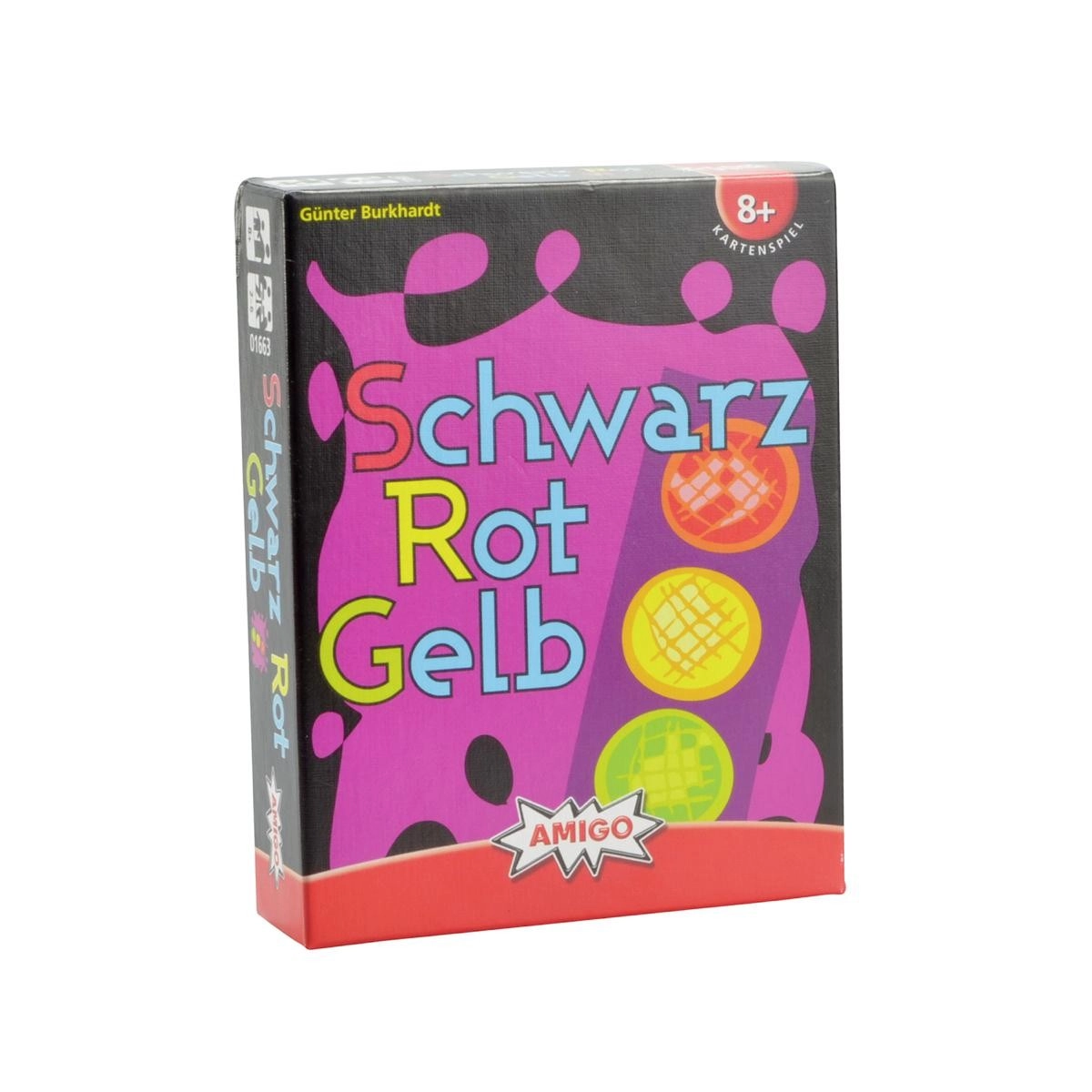
Maak een reeks van 11 opeenvolgende kaartjes waarbij de kenmerken op de kaart verschillende zijn met de kenmerken op het voorgaande kaartje.Een waanzinnig leuk maar moeilijk reactiespel !
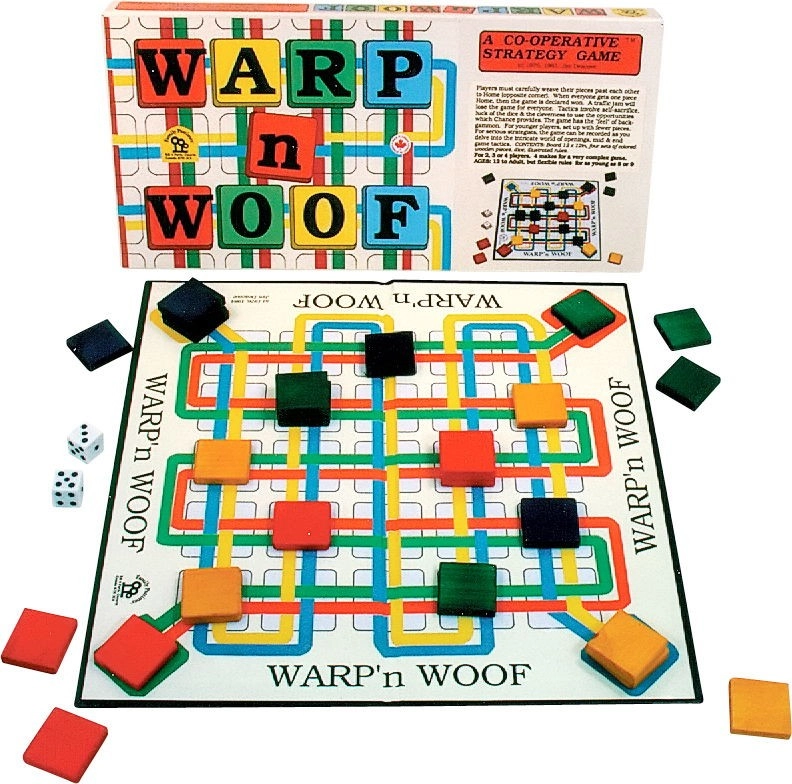
Warp 'n Woof is een leuk spel voor het hele gezin. D Het doel van het spel is om 1 van je 3 stenen naar de overkant te krijgen door de lijn te volgen die overeenkomt met de kleur waarmee je speelt. Wat dit spel bijzonder maakt is dat je niet tegen elkaar speelt, maar met elkaar.
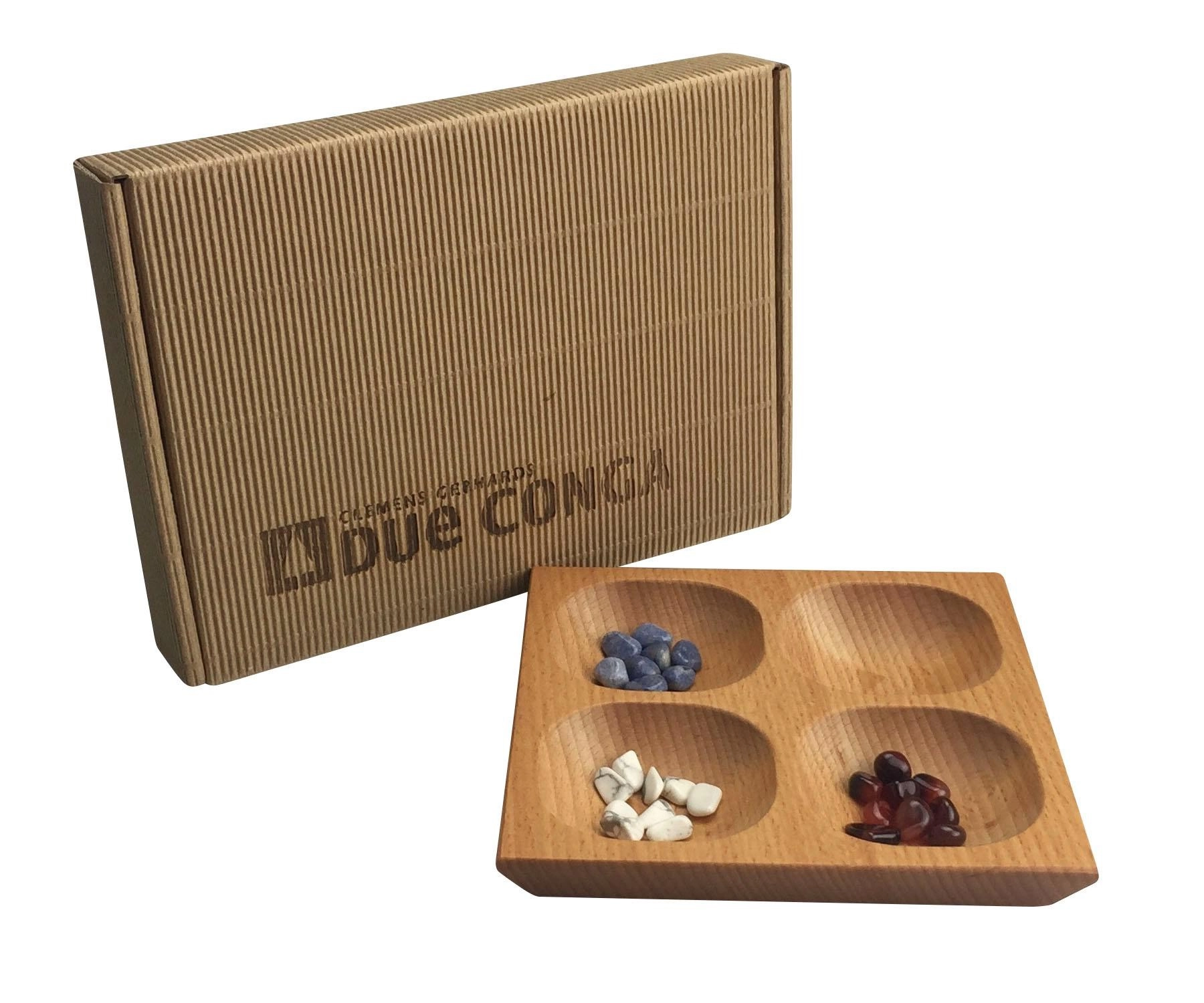
Due Conga is a strategy game for two players in which the players take turns placing 1, 2, or 3 semi-precious stones according to five rules into one of the four boxes. The player who has to place their last stone into the container loses the game.
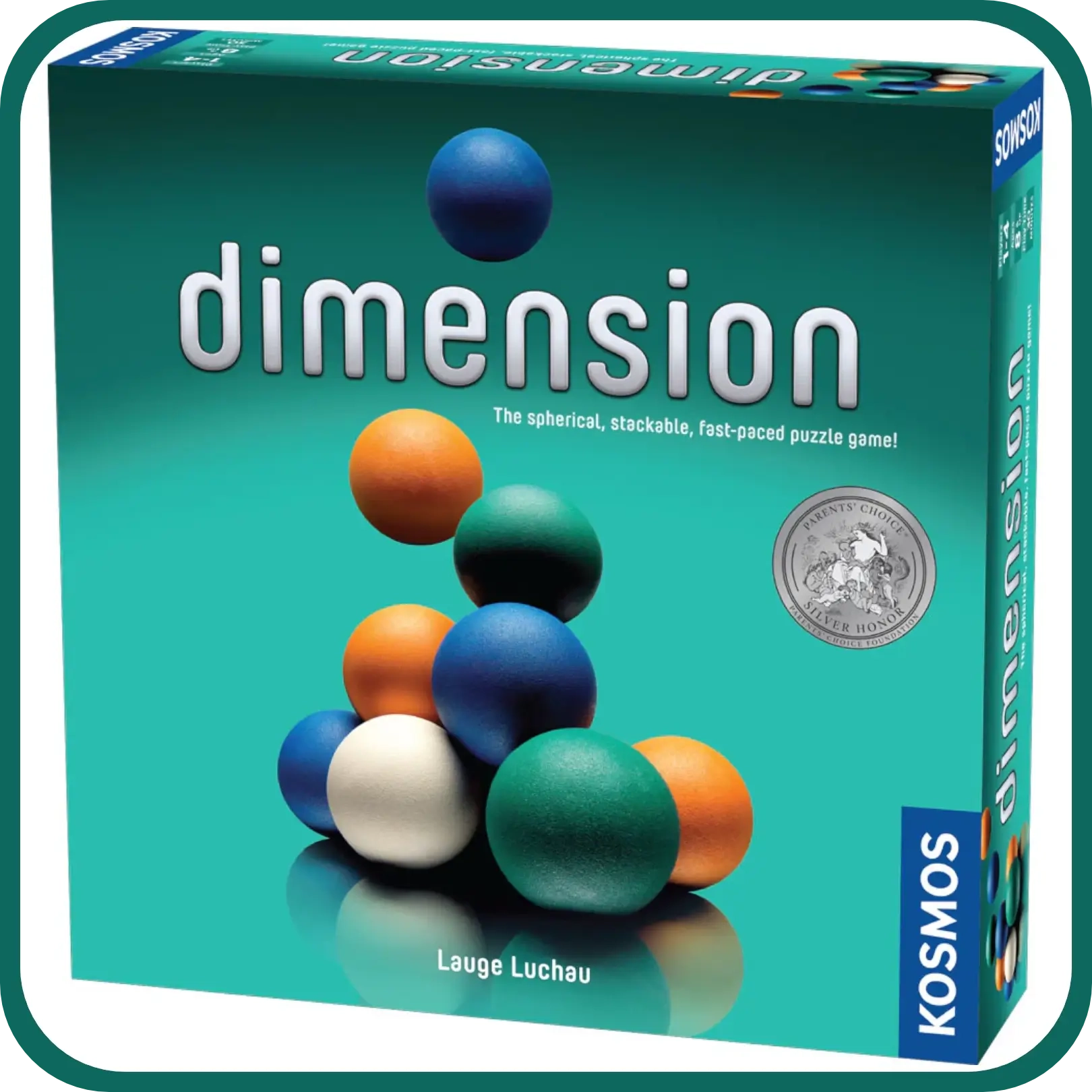
Dimension is een snel en innovatief puzzelspel dat zich afspeelt in drie dimensies met 60 kleurrijke bollen.Leg zoveel mogelijk balletjes op je speelveld. Maar let op: houd je aan zoveel mogelijk opdrachtkaartjes, want elk opdracht waaraan je je niet houdt levert strafpunten op.